Snyk Alternatives 2026: 9 Tools Compared (SAST, SCA, IaC)
9 Snyk alternatives compared for 2026: Semgrep, Trivy, Grype, Checkov, SonarQube, Mend & more. SAST, SCA, container & IaC scanning, pricing, OSS fit.
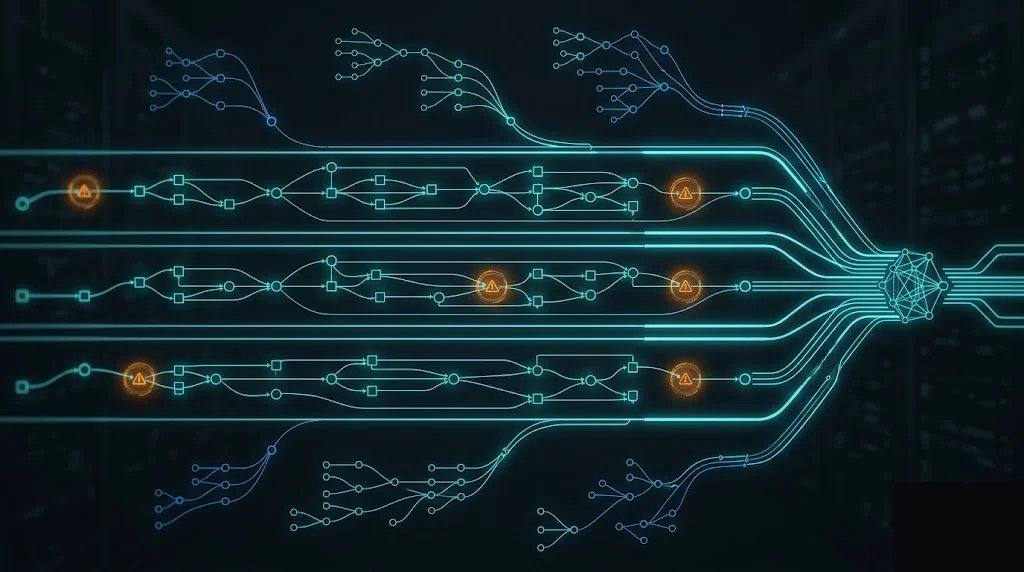
Snyk set the developer-first security-scanning bar when it launched, and for years it was the default answer to “what should we put in our CI for security?”. In 2026 the landscape has fragmented. Different tools now win in different categories, pricing pressure at scale has driven many teams to mixed open-source stacks, and Kubernetes-native scanning has moved runtime detection beyond what any single SaaS platform covers well.
This guide compares the top 9 Snyk alternatives for continuous DevSecOps across four scanner categories - SAST, SCA, container scanning, and IaC scanning - with honest notes on where each tool fits, pricing posture, and how they integrate into UAE-compliant CI/CD pipelines.
The Snyk Scope and Why People Leave
Snyk spans four core scanner categories in one platform: Snyk Code (SAST), Snyk Open Source (SCA for dependencies), Snyk Container (image scanning), and Snyk IaC (Terraform, Kubernetes manifests, CloudFormation). A Snyk licence typically covers all four. This breadth made Snyk the easy “one platform to rule them all” pick in 2019-2023.
Three drivers push teams toward alternatives in 2026:
Pricing at scale. Snyk pricing tracks developer seat count and project count. For a mid-size engineering team (100-300 developers), annual spend routinely crosses USD 100k. Open-source alternatives achieve 80%+ of the scanner scope at near-zero licence cost - and mid-size UAE enterprises have the operational capacity to run them.
Accuracy and language coverage. Snyk’s SAST and SCA engines are solid on JavaScript, Java, and Python but leave gaps on Rust, Go, Elixir, and mixed-language monorepos. Teams with unusual stacks often find Semgrep (SAST) and Trivy (SCA) deliver better signal on their specific codebase.
Build-time latency. Snyk’s cloud-scanning model sends code context to Snyk’s servers for analysis. Local-first tools (Semgrep, Trivy, Grype) run entirely inside the CI runner and finish in seconds rather than minutes. At scale, the time savings compound across thousands of CI runs per day.
Category 1: SAST (Source Code Analysis)
Semgrep is the 2026 default open-source SAST tool and Snyk Code’s closest competitor. It uses pattern-based analysis rather than heavy dataflow, so it runs fast (seconds per repo) and exposes a simple rule-writing DSL for custom checks. Semgrep OSS is free; Semgrep AppSec Platform adds managed rules, secrets scanning, and supply-chain features at a fraction of Snyk’s pricing. Strong on Python, JavaScript, TypeScript, Java, Go, Ruby, C, C++, Rust.
SonarQube / SonarCloud covers SAST with deeper static analysis than Semgrep - more accurate on data-flow-sensitive bugs, slower in CI. SonarCloud is hosted SaaS; SonarQube Community is free self-hosted; SonarQube Enterprise adds compliance reporting. Better fit for Java-heavy enterprises.
CodeQL (GitHub) is the highest-accuracy SAST engine on the market for supported languages. Free for public repos and via GitHub Advanced Security. Slower than Semgrep. Best for GitHub-native shops already paying for GHAS.
Checkmarx and Veracode are the traditional enterprise SAST platforms - deep, compliance-focused, slow, expensive. Rarely the 2026 first choice unless regulatory expectations mandate them.
Practical pick for continuous DevSecOps: Semgrep for speed and custom rules, CodeQL if you’re on GitHub Advanced Security, SonarQube if Java-heavy or compliance reporting matters.
Category 2: SCA (Software Composition Analysis)
Trivy (Aqua Security, open source) is the dominant open-source SCA tool in 2026. Scans for CVEs across most language package managers (npm, PyPI, Maven, Go modules, Cargo, Composer, RubyGems, NuGet), runs in seconds, integrates into any CI. Trivy’s CVE database is refreshed continuously from multiple feeds including NVD, GitHub Security Advisories, and distro-specific sources.
Grype (Anchore, open source) is Trivy’s closest alternative with similar scope and a slightly different feed mix. Teams often run both in CI for broader coverage on critical services. See our Trivy vs Grype head-to-head for which to pick and how to run them together.
OWASP Dependency-Check is the veteran open-source SCA tool. Older, slower, but still the reference for regulatory-compliance-minded teams that want OWASP-project attestation.
Mend (formerly WhiteSource) is the enterprise commercial SCA leader. Deep coverage including transitive dependencies, license compliance, and remediation suggestions. Pricey but well-supported for regulated industries.
Black Duck (Synopsys) is the other enterprise incumbent - strong on open-source licence compliance for M&A due diligence, less focused on CVE speed. Often deployed alongside commercial SAST.
Dependabot (GitHub, free) auto-opens pull requests to update vulnerable dependencies. Not a scanner per se but an operational tool. Pair it with Trivy or Grype for full coverage. If you are weighing the update bot itself, our Dependabot vs Renovate comparison breaks down where each one fits.
Practical pick for continuous DevSecOps: Trivy + Dependabot covers most use cases at zero licence cost. Add Mend or Black Duck for compliance-critical engagements where commercial accountability matters.
Category 3: Container Image Scanning
Trivy wins container scanning as well as SCA - the same binary scans OCI images for OS package CVEs, language-ecosystem CVEs, misconfigurations, secrets, and SBOM generation. Trivy Operator runs the same checks continuously inside Kubernetes clusters.
Grype is the other strong open-source choice with comparable scope.
Clair (open source, originally from CoreOS) is the oldest container scanner and powers registries like Quay. Solid but less feature-rich than Trivy in 2026.
Aqua Platform is the enterprise-grade offering from the same team behind Trivy OSS. Adds policy enforcement, runtime protection, and compliance dashboards. Strongest commercial container-security platform for Kubernetes-heavy enterprises.
Prisma Cloud (Palo Alto) combines container scanning with cloud posture management and runtime protection. Deep but heavy - often overkill for engineering-only use cases.
Wiz has moved into container scanning as part of its broader CNAPP platform. Strongest on cloud context, fast to adopt.
Practical pick for continuous DevSecOps: Trivy for build-time scanning + Trivy Operator for continuous cluster scanning. Upgrade to Aqua or Prisma for runtime protection in regulated environments.
Category 4: IaC (Infrastructure-as-Code) Scanning
Checkov (Prisma Cloud, open source) is the deepest IaC scanner in 2026 - Terraform, CloudFormation, Kubernetes manifests, Helm, ARM, Bicep, Serverless Framework, and more. Ships with thousands of built-in policies mapped to CIS, NIST, HIPAA, PCI DSS, SOC 2. Custom policies via Python.
tfsec (Aqua Security, open source) is the Terraform-focused alternative - faster than Checkov on pure Terraform, narrower scope. Still actively maintained.
Terrascan (open source) covers Terraform + Helm + Kustomize with OPA-based policies. Less actively maintained than Checkov / tfsec in 2026.
KICS (open source, from Checkmarx) competes with Checkov on breadth - more modest adoption but extensive policy coverage.
Snyk IaC remains competitive in this category, tied into Snyk’s broader platform.
Practical pick for continuous DevSecOps: Checkov as default (breadth + policy depth), tfsec if Terraform-only, both if the team prefers Terraform-specific guidance.
Specialist Categories: Secrets and Policy-as-Code
Not all Snyk functionality maps to alternatives cleanly. Two specialist categories need their own tools:
Secrets scanning - Snyk has added secret scanning, but the specialists remain dominant: GitGuardian (enterprise SaaS with compliance reporting), TruffleHog (open source, strong on git-history scanning), Gitleaks (fast open-source pre-commit hook), Semgrep Secrets (integrated into AppSec Platform). See our dedicated secrets scanners comparison for depth.
Policy-as-code enforcement - Snyk does not enforce, it reports. Enforcement lives in OPA/Gatekeeper or Kyverno for Kubernetes, and Sentinel or OPA Terraform for infrastructure. No direct Snyk alternative here; it’s a complementary layer.
Side-by-Side Comparison Table
| Tool | Category | Open Source | Enterprise | Best For |
|---|---|---|---|---|
| Semgrep | SAST | Yes | AppSec Platform | Developer-first SAST, custom rules |
| SonarQube | SAST | Community tier | Enterprise | Java-heavy enterprises, compliance reporting |
| CodeQL | SAST | Yes (public) | GHAS | GitHub-native shops |
| Trivy | SCA, Container, IaC, Secrets | Yes | Aqua Platform | All-in-one OSS scanner |
| Grype | SCA, Container | Yes | - | Secondary CVE scanning |
| OWASP Dep-Check | SCA | Yes | - | OWASP attestation |
| Mend | SCA, License | - | Yes | Enterprise SCA with support |
| Black Duck | SCA, License | - | Yes | M&A due diligence, license compliance |
| Dependabot | SCA | Yes | GHAS | Automated dependency PRs |
| Clair | Container | Yes | Quay | Registry-integrated scanning |
| Aqua Platform | Container, Runtime | - | Yes | Enterprise K8s security |
| Prisma Cloud | Container, Cloud, Runtime | - | Yes | CNAPP across AWS/Azure/GCP |
| Wiz | Container, Cloud | - | Yes | Agentless CNAPP, fast adoption |
| Checkov | IaC | Yes | Prisma Cloud | Broadest IaC policy coverage |
| tfsec | IaC (Terraform) | Yes | - | Fast Terraform-specific scans |
| Terrascan | IaC | Yes | - | OPA-based IaC policies |
| KICS | IaC | Yes | - | Alternative IaC breadth |
Best Snyk Alternatives for Dependency Scanning (SCA)
If you are specifically searching for alternatives to Snyk for dependency scanning, the picture narrows. Snyk Open Source is the SCA part of the platform - it scans your manifests and lockfiles for vulnerable direct and transitive dependencies. Teams usually leave it for one of two reasons: the free-tier test cap (Snyk’s free plan limits monthly tests, which a polyglot monorepo with many repos burns through fast) and per-repo / per-developer pricing that scales painfully at 50, 200, or 500 repositories. The 2026 differentiator separating the best Snyk SCA alternatives is reachability analysis - whether the tool tells you a vulnerable function is actually called in your code, which is what cuts triage noise by roughly an order of magnitude.
For most teams the real question is not Snyk versus a free scanner - it is whether you need reachability, because that single feature decides about 90% of the alert noise. Open-source scanners flag every vulnerable package; commercial reachability tools flag the ones you can actually exploit.
Here is a focused comparison of the top dependency scanning (SCA) alternatives to Snyk in 2026:
| Tool | License | Ecosystems | Reachability | SBOM | CI Integration | Cost Model | Best For |
|---|---|---|---|---|---|---|---|
| Trivy | Open source (Apache 2.0) | npm, PyPI, Maven, Go, Cargo, Composer, RubyGems, NuGet + more | No | Yes (CycloneDX, SPDX) | GitHub Actions, GitLab CI, Jenkins | Free | All-in-one OSS SCA (deps + IaC + containers + secrets) |
| OSV-Scanner | Open source (Apache 2.0) | Lockfile-driven across OSV.dev ecosystems | No | Consumes SBOM | GitHub Actions, CLI | Free | Lockfile-accurate scanning backed by Google’s OSV.dev |
| Grype | Open source (Apache 2.0) | Broad, SBOM-driven (paired with Syft) | No | Yes (via Syft) | GitHub Actions, GitLab CI, CLI | Free | SBOM-first scanning, filesystem + container coverage |
| OWASP Dependency-Check | Open source (Apache 2.0) | Java, .NET strongest; others via plugins | No | Limited | Maven, Gradle, Jenkins, CLI | Free | OWASP attestation, Java/.NET regulated shops |
| Mend (formerly WhiteSource) | Commercial | Very broad, deep transitive coverage | Yes | Yes | Native CI plugins, IDE | Per-repo / per-contributor | Enterprise SCA with license policy + support |
| Black Duck (Black Duck Software) | Commercial | Very broad | Partial | Yes | Native CI plugins | Per-project / enterprise | License compliance, M&A due diligence |
Open-source picks. Trivy is the default if you want one binary covering dependencies, containers, IaC, and secrets - fewer tools to wire into CI. OSV-Scanner (backed by Google’s OSV.dev) is the most accurate on lockfile-pinned dependencies and pairs well as a second opinion. Grype shines when you are already generating SBOMs with Syft and want SBOM-driven scanning. OWASP Dependency-Check remains the reference for Java and .NET teams that need OWASP-project attestation, at the cost of more false positives and slower runs.
Commercial picks (for reachability). Mend leads commercial SCA with deep transitive coverage, license policy enforcement, and reachability analysis that filters vulnerabilities down to those your code actually invokes. Black Duck is strongest on open-source license compliance and due-diligence reporting. Paid reachability is worth it when your team is drowning in vulnerability tickets and engineer triage time costs more than the licence; a free scanner plus disciplined severity-gating is usually enough for smaller teams.
A mixed open-source SCA stack. The most cost-effective 2026 replacement for Snyk Open Source is Trivy or OSV-Scanner for dependency scanning + Syft for SBOM generation + Dependency-Track for triage, policy, and historical tracking. Run the scanner as a PR check that fails on critical and high findings, generate an SBOM on every release, and feed results into Dependency-Track so you have a single policy and audit-evidence layer across all repositories. For UAE teams under NESA or CBUAE rules, this stack keeps dependency data and scan logs in-region by default because everything runs on your own CI runners - no code or findings leave the country. See our SBOM tools comparison for the SBOM layer in depth.
A Practical Replacement Blueprint
For a team currently running Snyk Code + Open Source + Container + IaC, a cost-effective 2026 migration stack:
- SAST: Semgrep OSS (or Semgrep AppSec Platform if commercial support needed)
- SCA: Trivy + Dependabot + optional OWASP Dependency-Check for compliance reporting
- Container: Trivy + Trivy Operator for cluster-side continuous scanning
- IaC: Checkov for policy breadth + tfsec for Terraform speed
- Secrets: GitGuardian or TruffleHog (see our dedicated comparison)
- Aggregation: DefectDojo to consolidate findings across scanners
- Policy enforcement: OPA/Gatekeeper for Kubernetes, Sentinel or OPA for Terraform
This stack matches Snyk’s scope, typically saves 60-80% on licence spend for mid-size teams, and gives data-residency by default (everything runs locally on your CI runners).
What About Continuous Runtime Security?
Snyk does not cover runtime threat detection. For continuous DevSecOps that extends into production, add:
- Falco (CNCF, open source) for runtime Kubernetes threat detection
- Trivy Operator for continuous manifest and image scanning inside clusters
- Kubescape for CIS Kubernetes Benchmark and NSA hardening validation
- Wiz / Prisma Cloud for cloud posture and workload protection
These are the subject of our Kubernetes security scanners comparison - the natural companion to this post.
Swapping Snyk for best-of-breed OSS is smart - but SAST, SCA, container, and IaC scanning still have to work together as enforced CI/CD gates. We integrate the full stack and map it to NESA, DESC, and CBUAE controls. Fixed-scope, senior engineers.
Book a secure-CI/CD scoping callUAE Compliance Considerations
For UAE enterprises under NESA, DESC ISR v3, CBUAE Article 13, or NCA ECC:
- Data residency: local-scan tools (Trivy, Semgrep, Checkov) keep code and findings in-country by default. SaaS scanners (Snyk, Wiz, GitGuardian) need explicit residency attestation - verify their Dubai / UAE North region availability.
- Audit evidence: every scanner’s findings must be exportable as machine-readable evidence (SARIF, JSON) for compliance reporting.
- Enforcement: the Guidance is that scanning without blocking is reporting, not security. Configure CI to fail builds on critical findings and document the enforcement.
How NomadX DevSecOps Delivers
NomadX DevSecOps runs Snyk replacement and DevSecOps tool stack consolidation engagements as fixed-scope sprints:
- 5-day DevSecOps Assessment - evaluates current tooling, quantifies overlap and gaps, produces a prioritized consolidation roadmap
- 4-8 week DevSecOps Implementation Sprint - deploys the selected stack across CI/CD, trains engineers, and delivers policy-as-code templates mapped to applicable UAE frameworks
- Monthly DevSecOps Retainer - ongoing rule tuning, upgrade management, finding-aggregator operation, and audit-evidence preparation
Engagements typically reduce annual scanner licence spend by 50-80% for mid-size UAE enterprises while improving coverage across SAST, SCA, container, IaC, secrets, and runtime categories.
Book a free 30-minute discovery call to scope your Snyk-replacement or DevSecOps consolidation engagement.
Frequently Asked Questions
What is the best alternative to Snyk in 2026?
There is no single best alternative because Snyk spans four scanner categories (SAST, SCA, container, IaC). For open-source-first teams: Semgrep (SAST) + Trivy (SCA, container, IaC) covers 80% of Snyk's scope at zero licence cost. For enterprise teams needing commercial support: Mend or Black Duck for SCA, SonarQube Enterprise for SAST, Aqua or Prisma Cloud for container + runtime. For compliance-heavy UAE workloads: Checkov + tfsec for IaC, Trivy Operator for Kubernetes, Semgrep for SAST.
Why do teams migrate away from Snyk?
Three common drivers in 2026: (1) pricing at scale - Snyk licensing grows with developer seat count and can exceed $100k/year for mid-size engineering teams; (2) scanner accuracy on specific stacks - teams with unusual language mixes (Rust, Go, Elixir) often find open-source alternatives match or beat Snyk's findings; (3) build-time latency - Snyk's cloud-scanning model adds network round-trips to every CI run, where local-first tools (Trivy, Semgrep) keep pipelines fast.
Is Semgrep a good Snyk alternative for SAST?
Yes, for most use cases. Semgrep OSS delivers developer-first SAST with custom rule authoring, fast CI integration, and strong language coverage (Python, JavaScript, TypeScript, Java, Go, Ruby, C, C++, Rust). Semgrep Pro / AppSec Platform adds supply-chain features, secrets scanning, and managed rule sets. Semgrep generally wins on false-positive rate vs traditional SAST and is the most popular Snyk SAST replacement in 2026 cloud-native teams.
Is Trivy a good Snyk alternative for SCA and container scanning?
Yes. Trivy (from Aqua Security, open source) covers SCA for most language ecosystems, container image scanning for known CVEs, IaC scanning, Kubernetes manifest scanning, and secret scanning in a single CLI. It runs in seconds on modest hardware, integrates cleanly into GitHub Actions / GitLab CI / Jenkins, and matches Snyk's findings on Python, JavaScript, and Go ecosystems in independent benchmarks. For UAE deployments with data-residency constraints, Trivy's fully local scanning is an advantage.
What are the best open-source Snyk alternatives?
Top open-source combination in 2026: Semgrep (SAST), Trivy (SCA + container + IaC + secrets), Grype (additional CVE scanning), Checkov (deep IaC policy-as-code), tfsec (Terraform-specific), Gitleaks (secrets), OWASP Dependency-Check (SCA). Pair these with a policy engine (OPA / Kyverno for Kubernetes) and a findings aggregator (DefectDojo) and you have a fully open-source DevSecOps pipeline that rivals commercial platforms on scope.
Can open-source tools replace Snyk at enterprise scale?
For technical scope, yes - open-source tools match or exceed Snyk in most categories. For enterprise operational needs, the trade-off is support and centralized management: open-source requires you to build dashboards (DefectDojo, custom Grafana), manage rule updates, and run your own support function. Mid-size UAE enterprises typically save 60-80% on licence cost vs Snyk by going open-source + investing 20-30% of the savings in operational tooling. Larger enterprises often keep a commercial platform for centralized reporting.
How do Snyk alternatives integrate with UAE compliance requirements?
For NESA, DESC ISR v3, CBUAE Article 13, and NCA ECC compliance, the relevant criteria are: data residency (where scans run and where findings are stored), audit evidence (machine-readable findings for compliance reports), and integration with enforcement (blocking releases on policy violations). Open-source tools running locally on UAE-resident CI runners satisfy residency by default. Commercial tools need explicit data residency attestation - verify their SaaS regions before adopting.
What's the best DevSecOps tool stack for UAE banks?
For CBUAE-regulated UAE banks in 2026: Semgrep Pro (SAST with commercial support), Trivy Operator (Kubernetes runtime scanning), Checkov (IaC policy-as-code), GitGuardian (secrets scanning with compliance reporting), and either Wiz or Prisma Cloud (cloud posture management). This stack satisfies Article 13 Annex II evidence requirements, gives named commercial accountability for critical scanners, and integrates with Azure Sentinel or Splunk for centralized SIEM reporting.
What is the best alternative to Snyk for dependency scanning specifically?
For dependency scanning (SCA) only, the best open-source alternative is Trivy if you want one tool covering dependencies, containers, IaC, and secrets, or OSV-Scanner (backed by Google's OSV.dev) for the most accurate lockfile-pinned scanning. Both are free and run locally in CI. If your problem is alert fatigue rather than cost, the commercial differentiator is reachability analysis - Mend and Black Duck filter findings down to vulnerabilities your code actually calls, which cuts triage noise by roughly an order of magnitude. The most cost-effective mixed stack is Trivy or OSV-Scanner for scanning, Syft for SBOM generation, and Dependency-Track for triage and policy.
Do OSV-Scanner, Grype, or Trivy do reachability analysis?
No. As of 2026, the leading open-source SCA scanners - Trivy, OSV-Scanner, Grype, and OWASP Dependency-Check - do not perform function-level reachability analysis. They flag every vulnerable direct and transitive dependency regardless of whether the vulnerable code path is actually invoked. Reachability is currently a commercial differentiator: Mend offers it, and Endor Labs built its product around function-level reachability. If you adopt a free scanner, plan for disciplined severity-based triage to manage the higher finding volume, or budget for a commercial tool if engineer triage time outweighs the licence cost.
Complementary NomadX Services
Get Started for Free
We would be happy to speak with you and arrange a free consultation with our DevOps Expert in Dubai, UAE. 30-minute call, actionable results in days.
Every engagement is scoped by our principal architect, Adrian Vale: 20+ years in production engineering, 40+ professional certifications. Meet Adrian
Talk to an Expert